Pages

Monday, 13 May 2019

Crystals Chemistry

Aim: To learn about a saturated solution and how to make crystals
Definition of the solution: 
A liquid mixture, when something is dissolved into a liquid (eg: sugar in water) 

Definition of saturated: 
Having or holding as much as can be absorbed of something (when no more sugar or borax can be dissolved into the water)

Conclusion.
we had to make crystals. First, we had brainstormed of 'what are the kitchen equipment' that we can make crystals out of. I had a group which is David, Khush and me we were given each cup. our teacher put our cup with warm water and a teaspoon of sugar, salt and borax then we mix it.

In groups of three, you will make three different types of crystals and compare the results.


Image result for borax crystals

Ratio; 3 Tablespoons Borax per 1/2 cup water

Materials

1) Pipe Cleaner
2) String
3) Pegs
4) Borax
5) Cup
6) Steering stick
Process

Step 1: Shape pipe cleaners into a star shape.
Step 2: Hang star on a peg.
Step 3: Makeup a borax solution. 
Step 4: Label the cup.
Step 5: Put 3 spoon of borax.
Step 6: Steer it for 5 minutes.
Step 7: Get the star shape pipe cleaner and pg it inside above the water.

Sugar Crystals

Grow your own Sugar Crystals

Ratio: 1 cup sugar to 1/2 cup water

Materials

1) String 
2) Peg
3) Cup
4) Sugar
5) Pipe cleaner 
6) Steering stick

Process

Step 1: Make up a sugar solution. 
Step 2: Label the cup.
Step 3: Put six spoon of sugar.
Step 4: Steer it for 5 minutes.
Step 7: Get a string and tie it on the stick.
Step 8: Put it on the cup.
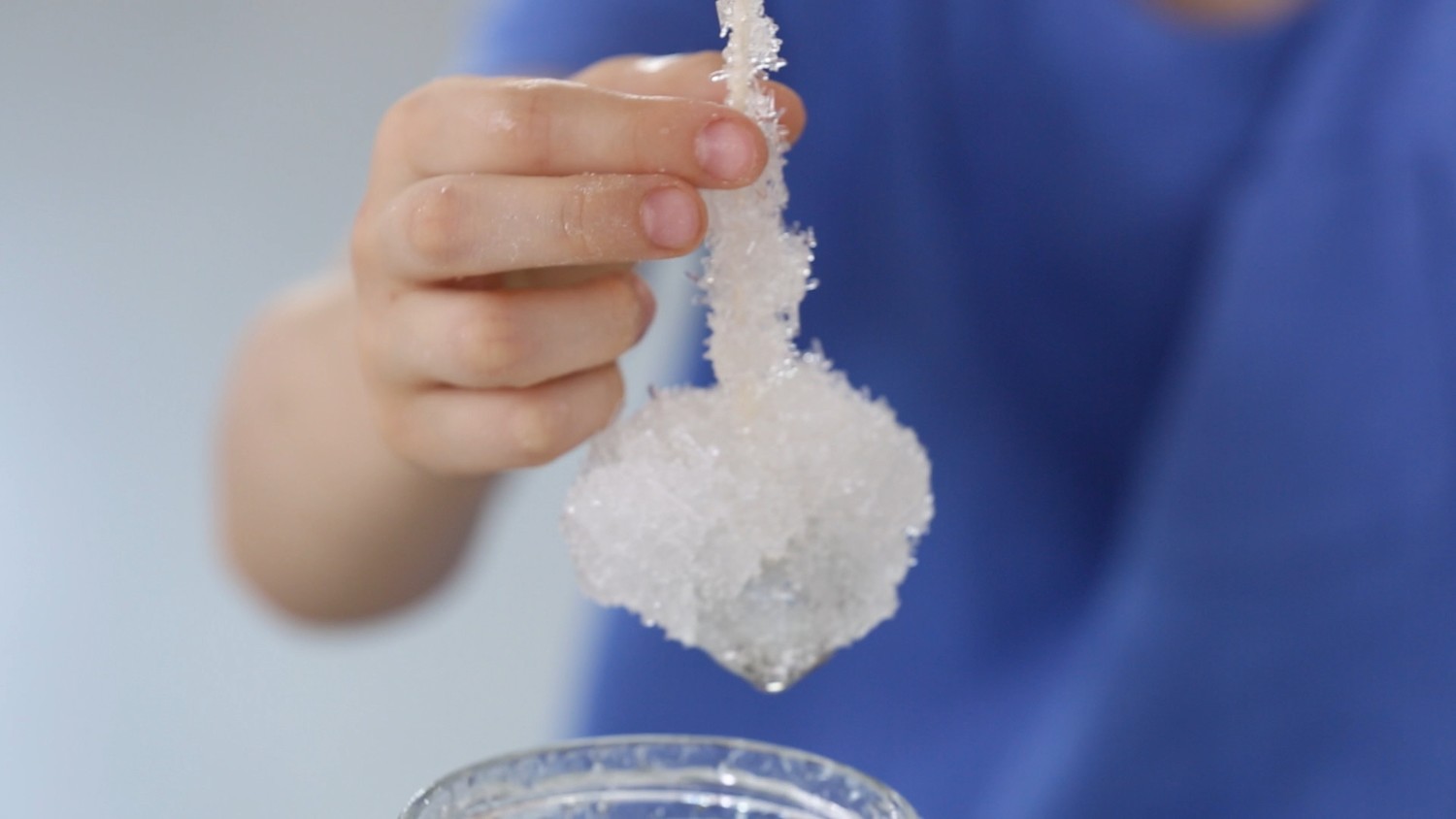

Image result for how to make salt crystals

Ratio: 4 Tablespoons salt to 1/2 cup water

Materials

1) Pipe cleaner
2) Salt
3) Cup
4) Peg
5) String
6) Steering stick

Process

Step 1: Make up a salt solution. 
Step 2: Label the cup.
Step 3: Put 3 spoon of salt.
Step 4: Steer it for 15 minutes. 
Step 5: Get a String then tie it in the stick.
Step 6: Put on the cup.


Findings

Describe your crystals in the table below.


Crystal Type
Shape
(Describe the shape)
Size
(of individual crystals)
Hardness
(Crumbly to Rock Hard)
Borax
Image result for borax crystal cubic


cubicsmallhard
medium
Sugar
Image result for sugarcubic crystal


orthombicsmallhard medium 
Salt
Image result for salt cubic crystal


cubicsmallhard
medium


After watching the videos as a class, explain how the following crystals are formed:


Type
Explanation
Salt

The sea water was set in the sun and it evaporates then the sea water and the salt was separated.   

Sugar
The sugar cane is cut into small pieces and crush into juice then remove the tiny bit of wood in the sugar juice then turned into a crystal.


Snowflakes
A little water falling from a sky then the water freeze into a snowflake.


CRYSTAL TYPES


AIM: TO LOOK AT THE 7 DIFFERENT TYPES OF CRYSTALS


Image result for salt crystal image
Salt Crystals

Image result for sugar crystal image
Sugar Crystals

Image result for borax crystal image
Borax Crystals


7 different crystal shapes


The 7 types of crystals


Type
Number of sides
2 examples
Image
Triclinic

7

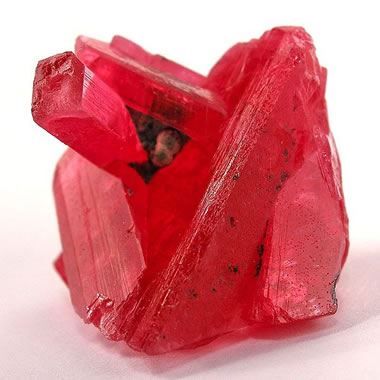
Turquoise Rhodonite

Image result for rhodonite
Monoclinic


8orthoclase
mica
Image result for Monoclinic crystal
Orthombic


6sulfur
topaz
Image result for orthombic crystal
Trigonal


10albite
microcline 
Image result for Trigonal crystal
Hexagonal


8quartz
calcite
Image result for Hexagonal crystal
Cubic


6silver
pyrite
Image result for cubic crystal
Tetragonal


12zircon
rutile
Image result for Tetragonal crystal

Friday, 10 May 2019

The benefits of physical activity education


I promise, that I would do physical every 30 hours 5 times a week is to go play basketball outside my house and do physical activities outside.

1. Running
2. Walk
3. Biking
4. Walking to my friend's house.
5. walking to school.'

Exercise and how they affect our body and mind.

Exercise affects the brain on multiple fronts. It increases heart rate, which pumps more oxygen to the brain. ... A study from Stockholm showed that the antidepressant effect of running was also associated with more cell growth in the hippocampus, an area of the brain responsible for learning and memory.

Health benefits of laughter yoga.

One of the best feelings in the world is the deep-rooted belly laugh. It can bring people together and establish amazing connections. Everything from a slight giggle to a side-splitting guffaw can change the temperature of a room from chilly unfamiliarity to a warm family-like atmosphere.


Monday, 6 May 2019

Filter, Chemistry

Aim: To make a filtration plant using household materials.

Image result for filtration science experiment
Water Filtration Plant

What is filtration?

Filtration is separating solids from liquids by adding a medium through which only the liquid can pass. 

Four types of filters.

1. Oil
2. Air
3. Water
4. kettle

Materials

1. Water Bottle
2. Filter Paper
3. Sand
4. Funnel
5. Scissor 
6. Rock
7. Dirty water

Step 1.Open a new blog post.
Step 2.List 4 types of filters.
Step 3.Collect a water bottle and cut it with scissors to make a funnel.
Step 4. Fold a filter paper to make a cone.
Step 5. collect sand.

Process 


Step 1

Cut the bottle.....

Step 2

Put the top half upside down .......

STEP 3

Add layers of ....

STEP 4

Get 1 cup of dirty water .......

STEP 5

Pour dirty water into ......

Findings

Write a short sentence about the water every 1 minute. 
Include 'How much water has filtered through', 'How fast it is dripping through', and 'How clear the water is'.

Minutes                          1. 33                        2.    62               3.       82             4.    109                   5.133
Drops per minute: 5 second
Water colour: white
Conclusion: I Learn that the dirty water becomes a clean water and it can be drinkable. I Learn if I put a sand on the a filter paper and put rocks into the filter, it can a clean a dirty water. I learn this lesson on chemistry that there is a way to clean a dirty water. In our Filter drops 33 in one minutes, in two minutes drops 62 in three minutes drops 82, then in four minutes drops in 109 and in five minutes drops in 133.

Friday, 3 May 2019

Math

This week on maths I have done a lot of work and improve from my learning on maths. On math, I have been repeating the answer if I can remember what I've learned.


Thursday, 2 May 2019

Home Chemistry Forensics, White powder

Aim: To learn about the makeup of different white powders.

There are a number of different white powders in our everyday life. Some of these are harmful and others are not. Test the four white powders listed to see which one has been found at the airport.

Here are some examples of everyday kitchen white powders.

Flour, Cornflour, Sugar, Salt, Baking Soda, Baking Powder, Icing Sugar, Tartaric Acid

Citric Acid, Gluten Free Flo

You will be given a small amount of 4 white powders on your cardboard. On the black cardboard using a magnifying glass look at the powders.
Look at them under your magnifying glass and record what you see. 

These are the four powders we will be using. Upload a photo of each powder. 

1.  Cornflour
2.  Baking Soda
3.  Salt
4.  Sugar 

Before you add the iodine, vinegar or water you will need to divide each powder into 3.

Materials

1.  Pipette
2.  Vinegar
3.  Iodine

Steps

1. Fold cardboard to 4.
2. Write 4 Chemicals on a 4 folded box. 
3. Put 4  Chemicals on 4 folded box.
4. Pure Iodine in three par of each.


Findings:


Sugar
Salt
Baking Soda
Cornflour
Appearance
A Softer whiteHarder whitewhite soft 
Texture
Hard, Soft? WetishHard, Soft?hardsmooth
Smell
SweetSaltySmoothedust
Iodine
Darker orange colour Turned darker and wetmade it turn orange as wellmade it turned into a dark and  it has a bit of pink colour 
Water
Silky whiteSilky water just wetslimy 
Vinegar
White Wetwetmade it bubblywet

Conclusion: Today I learned how or what to tell the difference between the powders by using different liquids and these three liquids is Iodine, Vinegar & water they all turned different colours and this is why I & a few friends could tell what the mystery powder was,
it was a good lesson. We were given a blackboard for each 4 powder to put it on the black cardboard. My group folded the black cardboard into four squares to put it on each powder.